

Two Years of UPLA Advocacy Helped Shape a New Direction for Utah’s Public Lands
July 13, 2026, marks a historic day for public lands in Utah, and for Utah Public Lands Alliance.
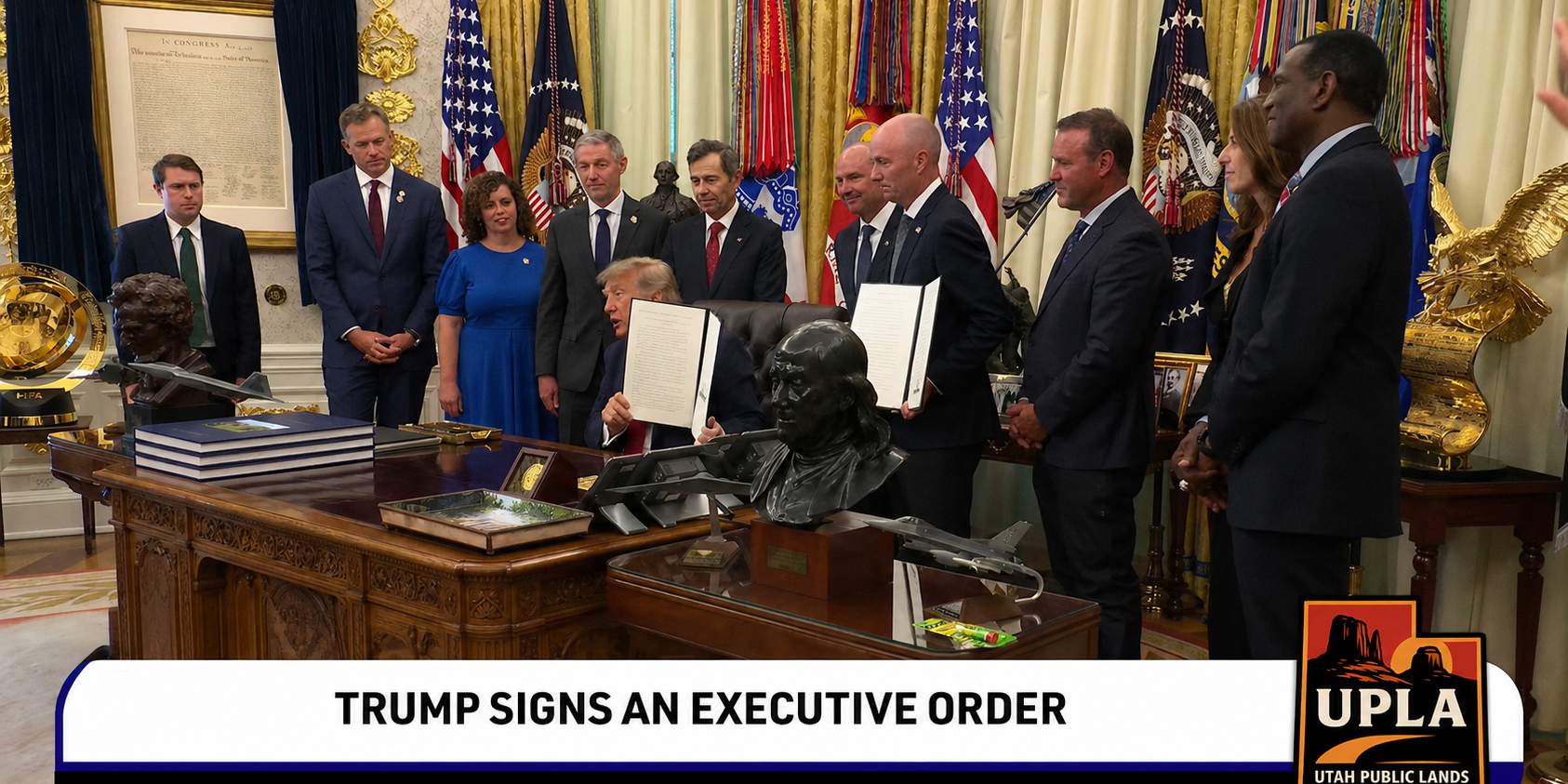
President Donald J. Trump signed proclamations modifying both the Bears Ears and Grand Staircase–Escalante National Monuments. While much of the media coverage has focused on the reduction in monument acreage, the proclamations accomplish far more than simply redrawing boundaries. They fundamentally change how these lands will be managed in the future, restoring multiple-use principles, improving local representation, and placing renewed emphasis on public access.
For Utah Public Lands Alliance (UPLA), this day represents the culmination of more than two years of persistent advocacy.
A Vision We Have Pursued Since Day One
From the beginning, UPLA has never argued that Utah’s priceless archaeological, historical, cultural, and scientific treasures should be left unprotected. Instead, we have consistently advocated for a balanced approach that:
- Protects the specific objects identified under the Antiquities Act.
- Limits monument boundaries to the “smallest area compatible” with protecting those resources, as required by federal law.
- Restores the Bureau of Land Management’s traditional multiple-use mission on surrounding public lands.
- Preserves opportunities for responsible recreation, grazing, hunting, energy development, and other lawful public uses.
Those principles have guided every meeting, every letter, every public comment, and every conversation we have had with decision-makers over the past two years.
Taking Utah’s Message to Washington
Last month, UPLA traveled to Washington, D.C., where we met with senior officials from the White House, the Department of the Interior, the Department of Agriculture, Members of Congress, and numerous national partners. Restoring Utah’s National Monuments was one of our primary objectives during those meetings.
We emphasized that these landscapes could—and should—protect nationally significant resources while also respecting the rights of the American people to responsibly enjoy and use their public lands. We advocated for restoring multiple-use management, expanding recreational opportunities, improving local involvement in monument management, and ensuring that monument boundaries complied with the Antiquities Act.
Seeing many of those same principles reflected in the President’s proclamations is both encouraging and gratifying.
The Story Is Much Bigger Than Monument Boundaries
Although the reduction in monument acreage has received the most attention, several other provisions may have an even greater long-term impact.
A Balanced Advisory Committee
The proclamation replaces the previous Bears Ears Commission with a new Monument Advisory Committee designed to provide broader representation.
The new committee includes:
- Five representatives of the federally recognized Tribes with historical ties to Bears Ears.
- Representatives from San Juan County, Monticello, Blanding, and Bluff.
- Six members recommended by the Governor of Utah representing diverse stakeholder groups, including:
- Archaeological and historical experts.
- Livestock grazing permittees.
- Outdoor recreation interests, including commercial recreation providers or off-highway vehicle users.
- Conservation organizations.
- Private landowners.
- Local business owners.
For the first time, off-highway vehicle users are specifically recognized as an important stakeholder in monument management.
Recreation Restored as a Core Management Objective
UPLA has long argued that responsible recreation deserves equal consideration alongside other traditional public-land uses.
The proclamation restores emphasis on multiple-use management, specifically identifying recreation—including off-road recreation—as an important use of these public lands.
This recognizes that responsible motorized recreation and resource protection are not mutually exclusive and can coexist through thoughtful planning and management.
Protecting What the Antiquities Act Was Intended to Protect
Rather than managing millions of acres under monument status, the proclamation establishes new boundaries focused on protecting the specific objects identified under the Antiquities Act.
The revised Bears Ears Monument continues to protect nationally significant resources, including the Shash Jáa Unit and the Indian Creek Unit, while returning surrounding lands to traditional multiple-use management.
This reflects the principle UPLA has consistently advocated: protect the important resources while allowing the surrounding public lands to remain available for the many uses Congress intended.
A New Transportation Plan Focused on Public Access
Perhaps one of the most exciting provisions for recreation is the direction given to the Secretary of the Interior and Agriculture.
The proclamation requires preparation of a new transportation plan that endeavors to maximize public access throughout the monument by designating roads and trails for both motorized and non-motorized use while providing for their maintenance.
Even more significant, pending completion of that transportation plan, the Secretary may allow public use of roads and trails that existed before the original Bears Ears proclamation and maintain those routes for continued public access.
For those who have spent years advocating for responsible access to public lands, this represents a remarkable change in direction.
Our Work Is Not Finished
These proclamations do not automatically reopen every road or trail.Future travel management plans, transportation planning, and resource management decisions will still require extensive public involvement.
That is where UPLA will continue to play an essential role.
Through our TrailSaver program, route inventory analyses, public education, and continued engagement with federal agencies, we will work to ensure these new opportunities result in meaningful improvements for public access while continuing to protect the remarkable resources that make these landscapes so special.
Thank You
None of this happens without you.
- Every membership.
- Every donation.
- Every volunteer.
- Every substantive public comment.
- Every conversation with elected officials.
Together, we have demonstrated that informed, respectful, and persistent advocacy can influence public policy at the highest levels of government.
It feels great to win, and today’s proclamations are not the end of our work—but they are an important milestone.
UPLA will continue fighting to ensure that Utah’s public lands remain protected, accessible, and responsibly managed for generations to come.
Loren Campbell
Utah Public Lands Alliance President
Email Your Comments