

Advancing the Outdoor Americans with Disabilities Act in Washington
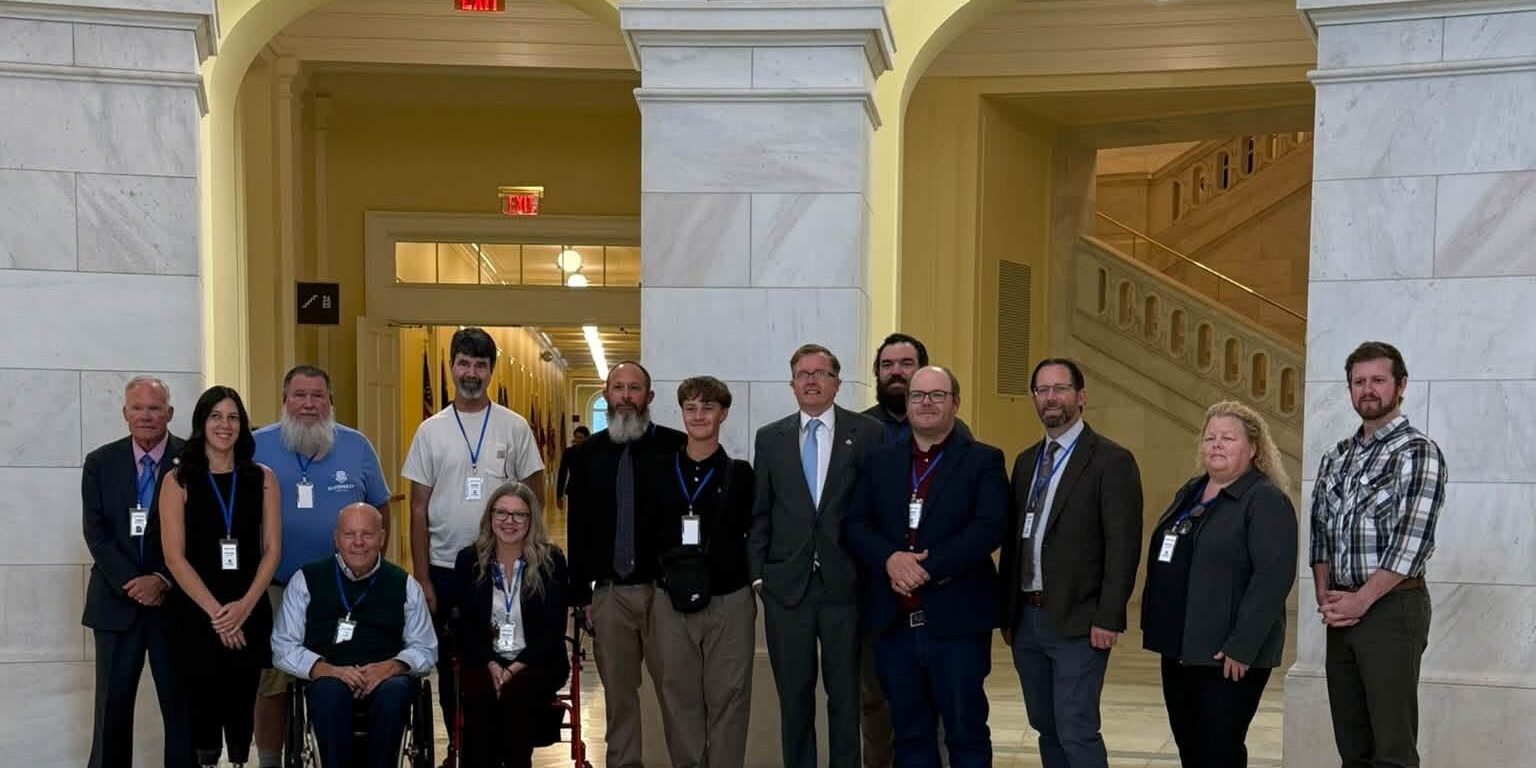
Last week, Utah Public Lands Alliance (UPLA), BlueRibbon Coalition (BRC), and 9 advocates with disabilities took the case for the Outdoor Americans with Disabilities Act (OADA) to Washington, D.C. We met with 25 House and Senate offices. The advocates shared personal stories of why an open road can determine whether they can reach and enjoy public lands at all.
For a person who can hike, a closed road may mean a longer walk. For someone with limited mobility, that closure may put a campsite, overlook, hunting area, or trail beyond reach. Our meetings gave lawmakers a clearer picture of the people affected by decisions that can look simple on a map.
The people behind the issue
Colton Geist was born without arms and drives a specially adapted off road buggy with his feet. His mother, Carmen, has multiple sclerosis and uses an adapted vehicle to continue exploring with the family. Their experience shows what thoughtful vehicle access makes possible.
Melissa Lones spent years hiking with her family before chronic inflammatory demyelinating polyneuropathy made walking difficult. A Jeep now lets her return to the mountains and share those trips with her family.
Brent Oliver lives with a high cervical spinal cord injury. A gate, fallen tree, or lost vehicle route can prevent him from reaching a place that other visitors may still be able to reach on foot.
Rick Draney is a Paralympic gold medalist, former world No. 1 wheelchair tennis player, and longtime accessibility advocate. He has served two terms on Utah’s Bureau of Land Management Resource Advisory Council and understands how public land decisions affect people with disabilities.
Alyssa Salemi is a bilateral below knee amputee. Her Toyota Tacoma has helped restore the independence to explore backcountry places that became difficult to reach on foot with prosthetics.
Nate Ramps is a disabled veteran, a 26 year Air Force retiree, and executive director of 4Wheel to Heal. He helps veterans experience the outdoors through motorized recreation and brought that perspective to the access discussion.
Matt “Big Sarge” is a disabled veteran living with multiple disabilities and president of the Utah 4 Wheel Drive Association. His leadership reflects the importance of keeping meaningful routes available to people who rely on vehicles to participate.
Loren Campbell is UPLA’s president, an Eagle Scout, and a lifelong backpacker, rock climber, and spelunker. At 70, after decades with Type 1 diabetes, he understands personally why motorized routes become more important as people age.
Next steps in the Senate and House
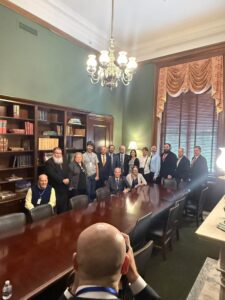 One of the most encouraging developments came from Senator Mike Lee, chair of the Senate Committee on Energy and Natural Resources and the Senate bill’s lead sponsor. In our discussions, Senator Lee committed to bringing OADA to committee markup. At markup, committee members can debate, amend, and vote on whether to advance the bill. It is a key step toward passage, although much work remains in both chambers. We also had great meetings with Senator Curtis and Congressman Mike Kennedy. Congressman Kennedy is also a physician, so he understands very well the challenges of disabled and aging populations.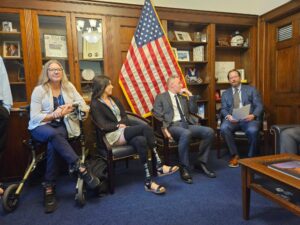
We also had positive meetings with AARP and the American Association of People with Disabilities (AAPD) as we seek broader support. Those conversations matter because the ability to reach public lands is relevant both to people living with disabilities now and to those whose mobility changes with age.
More than 70 million U.S. adults report a disability, according to the statistics we brought to Washington. An estimated 36 percent of adults age 65 and older reported a disability in a separate Census measure. The surveys use different definitions, but both show why access is a concern for many Americans and their families.
Help move OADA forward
Please contact your U.S. Representative and Senators and ask them to support and cosponsor the Outdoor Americans with Disabilities Act. Support from both parties will be especially important as the bill moves ahead.
If you or someone you know has a disability and uses a Jeep, truck, UTV, ATV, or other motorized vehicle to reach public lands, make an appointment with the nearest district or state office of your Representative or Senators. Tell staff what those roads make possible, and what losing a route would mean. Ask them to share your story with the member and recommend that the member become a cosponsor.
If you have a disability that limits your access to public lands without motorized vehicles, or if you make a personal visit, send me an email. Your account will help UPLA and our partners follow up and build the bipartisan support this bill needs.
Read the Senate bill and overview: Outdoor Americans with Disabilities Act